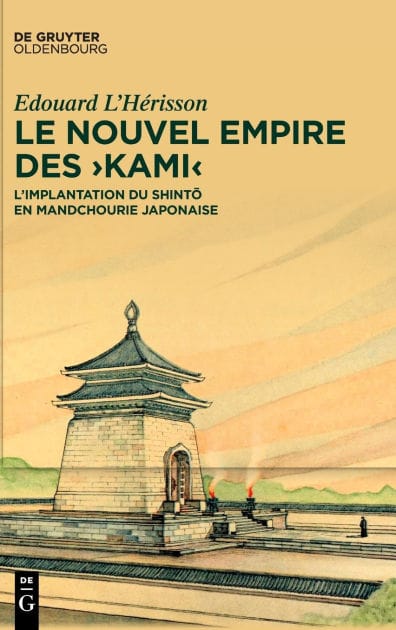
Le nouvel empire des >kami<: L'implantation du shinto en Mandchourie japonaise
by Edouard L'Hérisson
✓ In Stock
💰 Cash on Delivery available
Book Details
- ISBN
- 9783111534015
- Publisher
- De Gruyter
- Published Year
- 2025
- Pages
- 435
- Language
- French
- Category
- Religion
Description
How does shintō has taken part into the Japanese conquest of the Manchurian frontier?
Modern shintō is often seen as a unified ritual system based on shrines which are considered either as places embodying “State shintō”, or as popular places of worship. This point of view is even more emphasized in the case of “overseas shrines” erected during the Japanese expansion in Asia. The first purpose of this book is to show that these two dimensions are complementary and take part in the imperial movement in Manchuria during the first half of the 20th century. Contrarily to previous studies (for example Shimizu 2022 and Nakajima 2010) that usually focus on shrines, it focuses on the cases of three shintō leaders involved in the building process of Japanese Manchuria: Matsuyama Teizō (1878-1947), Deguchi Onisaburō (1871-1948) and Kakei Katsuhiko (1872-1961). These three cases allow us to shed light on three different ways of appropriating Manchurian space, enabling us to understand how such leaders are in the meantime driven by, and driving forces behind, the diffusion of shintō in particular, but also the imperial process in general, in these territories stretching from the Liaodong peninsula to Inner Mongolia.