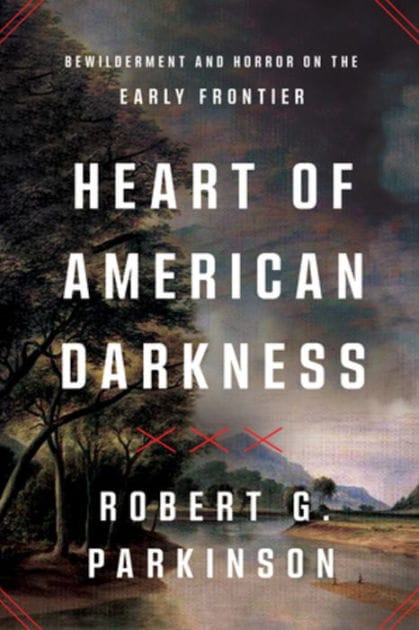
Heart of American Darkness: Bewilderment and Horror on the Early Frontier
by Robert G. Parkinson
✓ In Stock
💰 Cash on Delivery available
Book Details
- ISBN
- 9781324091776
- Publisher
- Norton, W. W. & Company, Inc.
- Published Year
- 2025
- Pages
- 480
- Language
- English
- Category
- History
Description
“A scarifying, blood-soaked portrait of savagery on the early frontier—much of it committed by European settlers . . . superb.”—Kirkus Reviews (starred)
An acclaimed historian captures the true nature of imperialism in early America, demonstrating how the frontier shaped the nation.
We are divided over the history of the United States, and one of the central dividing lines is the frontier. Was it a site of heroism? Or was it where the full force of an all-powerful empire was brought to bear on Native peoples? In this startingly original work, historian Robert Parkinson presents a new account of ever-shifting encounters between white colonists and Native Americans. Drawing skillfully on Joseph Conrad’s famous novella, Heart of Darkness, he demonstrates that imperialism in North America was neither heroic nor a perfectly planned conquest. It was, rather, as bewildering, violent, and haphazard as the European colonization of Africa, which Conrad knew firsthand and fictionalized in his masterwork.
At the center of Parkinson’s story are two families whose entwined histories ended in tragedy. The family of Shickellamy, one of the most renowned Indigenous leaders of the eighteenth century, were Iroquois diplomats laboring to create a world where settlers and Native people could coexist. The Cresaps were frontiersmen who became famous throughout the colonies for their bravado, scheming, and land greed. Together, the families helped determine the fate of the British and French empires, which were battling for control of the Ohio River Valley. From the Seven Years’ War to the protests over the Stamp Act to the start of the Revolutionary War, Parkinson recounts the major turning points of the era from a vantage that allows us to see them anew, and to perceive how bewildering they were to people at the time.
For the Shickellamy family, it all came to an end on April 30, 1774, when most of the clan were brutally murdered by white settlers associated with the Cresaps at a place called Yellow Creek. That horrific event became news all over the continent, and it led to war in the interior, at the very moment the First Continental Congress convened in Philadelphia. Meanwhile, Michael Cresap, at first blamed for the massacre at Yellow Creek, would be transformed by the Revolution into a hero alongside George Washington. In death, he helped cement the pioneer myth at the heart of the new republic.
Parkinson argues that American history is, in fact, tied to the frontier, just not in the ways we are often told. Altering our understanding of the past, he also shows what this new understanding should mean for us today.